
Some call her work a masterpiece of historical fiction; others dismiss it as “trauma porn.” Is her latest bestseller, The Women, a powerful tribute to the forgotten nurses of Vietnam or just a high-stakes soap opera?
Reading the criticism about Kristin Hannah’s books, I can see that she produces divisive work: some like her novels very much, even worship her talents, while others consider them “trauma porn.” Indeed, she maneuvers with a steady hand between deep historical trauma and emotional formulas optimized for audience success—the dynamics of history vs. “soap opera” forms a literary genre hybrid where you can feel the tension of wanting to be both historical fiction and an emotional bestseller. Indeed, her storytelling is truly emotionally powerful, and for some, that may be excessive; however, her novels are inspired by real historical locations and events, and center on often overlooked female roles.
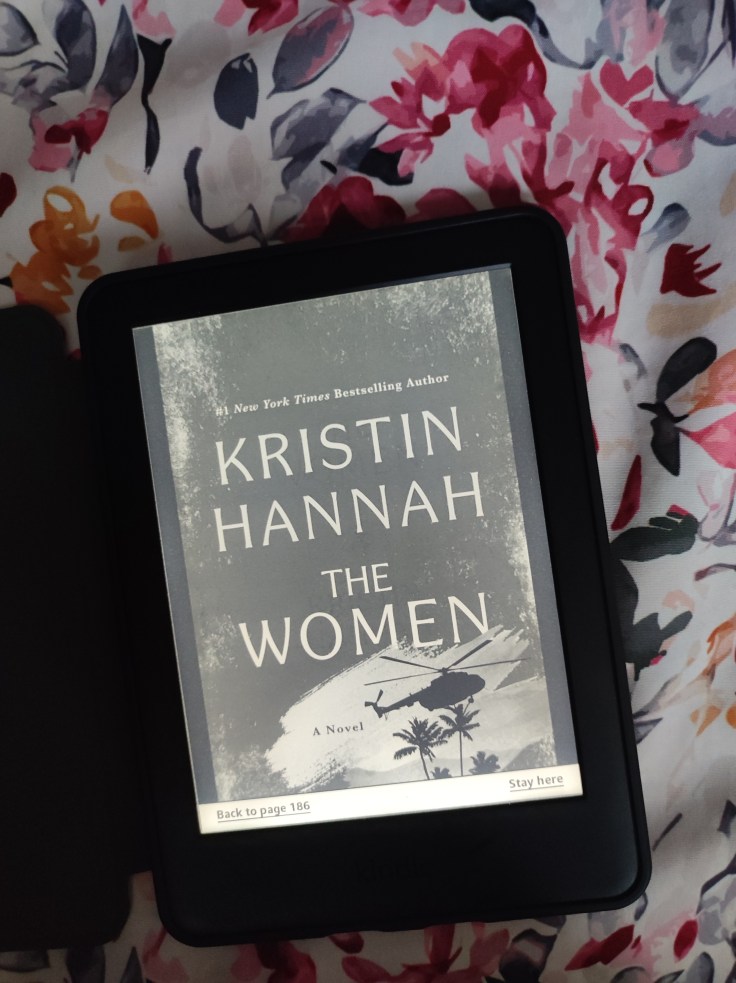
The Vietnam War and America’s role in it is a painful and politically charged subject, making The Women a particularly Marmite novel. In my opinion, The Women is a powerful story: the background is provided by the war, on top of which comes all-encompassing friendship and patriotism, a generation hardened and damaged in battle, and the difficult processing of trauma. Frances—or as everyone calls her, Frankie—comes from a patriotic, upper-middle-class family living on Coronado Island, where serving the country plays a vital role among the male relatives. Frankie’s brother is on a straight path to Vietnam after completing his military training, where he soon loses his life. Meanwhile, Frankie’s own life path seemed straightforward: heading towards marriage, motherhood, and maintaining a home—but death changes everything. Frankie feels she must take her brother’s place in her own way, so she signs up in the only way she knows how: as a nurse, volunteering for the war.
She, barely 20, soon finds herself deployed to a Vietnam hospital, where she experiences horrors, grievous injuries, and a number of deaths she had never imagined before. She is suddenly under tremendous pressure, in danger, and forced to adapt to a grueling pace of work. She survives the everyday life of service with two new, but soon very close, friends. Of course, she falls in love, but not only is he married, he also gets injured and is transported away. She finds a second love in the form of an old-new acquaintance: her brother’s schoolmate, who also serves in Vietnam. Frankie eventually returns home after two tours in a hopeful mood. But she receives a very different welcome than she expected: while on her way home from the airport, wearing her uniform, she is spat on, looked down upon, and called names. She cannot even catch a taxi—society is becoming disillusioned with the war, the leaders, and the war politics, which are seen as full of lies.
“Back in the world it had seemes importnat to be a good girl, to make her parents proud, but honestly, the horror she saw here every day made the rules of polite society seem unimportant.”
From there, Frankie has to to live with all aspects of this shift: her parents are not proud of her, they lie about where she was during those two years, where she tries to ask for help, she is sent away as no one accepts that there were women serving in the war, so there cannot be any female war veterans. Frankie, on the other hand, has nightmares, is afraid of fireworks, has emotional flashbacks, and tries to keep herself together with the help of her friends, lies, alcohol and drugs – unsuccessfully. Frankie actually goes to Vietnam as a child, where she has to grow up at lightning speed, and when she returns home, she has no idea what kind of adult she should be. Over time she learns to live with her trauma, her fate and even becomes a therapist, helping other women struggling with the same trauma – thereby strengthening the female narrative and working to make their stories accepted. The book ends with a memorial service many years after the war, where veterans finally receive some recognition – albeit belated, but at least a monument is erected to the fallen ones, including Frankie’s brother, and that is an opportunity for the family to find closure and realize that women’s service was also incredibly important in this war.
The first half of the story is about the sublimity of serving one’s country; meanwhile, the second half of the novel is about unprocessable trauma and PTSD, all set in a disillusioned society where everyone would like to forget and move on. The veterans who served in Vietnam become invisible, and women in particular: after all, “there were no women in Vietnam!”
This is the era when the dark side of “Thank you for your service” becomes apparent: the social hypocrisy towards the soldiers lost in Vietnam and the veterans, and specifically towards the recognition of the women who served. A society that either hated or ignored its veterans cannot truly acknowledge the service they gave for their common homeland. In this context, “Thank you for your service” is nothing more than a Band-Aid on a gunshot wound.
I really enjoyed reading this novel: it was my first from Kristin Hannah, but certainly not my last. I often felt a lump in my throat while reading (so the emotional resonance was effective), but I do think Hannah doesn’t torture her characters on purpose. It is not by chance that she chooses the tools of popular literature: she wants to bring the human factor to the widest possible audience, something academic history writing often relegates to a footnote. What the reader may feel is “too much” is often just a condensed impression of reality. Frankie’s journey from a naive girl to a traumatized but self-aware woman is a long, bumpy, difficult road. Since the role of women in this war remained a taboo for so long—how could this be expressed with such power and taken to as many readers as possible? Well, exactly like this.
 Még pár oldal - a betűgyár