
Hungarian Historical Curiositiy content ahead!
I’ve been struggling whether I should make English content about books that are not available in English (or any other language), only in Hungarian. I wish it were, but Hungary is a small Central-European country, the Hungarian language is tough to learn and even tougher to use it, so chances are most of our contemporary, popular literature will never going to be translated. Of course, Krasznahorkai’s Nobel prize gives all that a boost, but it will still remain in the domain of high literature the creations that might spread world-wide.
But here is a story of an orphan countess, who – against all odds, grew into a literate, bright young lady, speaking several foreign languages, a socially sensitive, empathetic, rich heiress of the Wenckheim fortune, putting her wealth in the service of the less fortunate. And it would be a shame not to share it.
Barbara Bauer is a Hungarian writer, previously stewardess, but luckily for us all, she’s been writing romantic-historical fiction for a while now, taking important moments of history as a black-and-white image and coloring them in a most sensible and heart-warming way. The book A leggazdagabb árva (The Wealthiest Orphan) tell the story of countess Krisztina Wenckheim, only child of count József Antal Wenckheim, one of the richest noble families of 19th century Hungary. Imagine a 67 years old count, childless, who falls in love the 22-year-old daughter of his housekeeper. Despite the gossips and the disapproval of the family, they get married. The count’s nephew, who’d already been dreaming of becoming the heir (if the count dies without a child), furiously, didn’t attend the weeding, instead he sent a carriage, drawn by black horses, delivering a balck coffin as a wedding gift – not very gentlemanly suggesting that the old count should rather die than start a new family.
BUT of course, his new wife, Scherz Krisztina gave birth to a girl, then unfortunately died in postpartum complications. The count shortly follows his wife, so Krisztina Wenckheim looses both her parents by the time she’s only 3.
Due to the circumstances, the count was worried and did all he could to ensure that the young countess will inherit everything and made steps to avoid his nephew being able to take that away from her. Besides making legal statement and making a will, he also appoints a guardian, the well-read and traveled priest. Gossip is a strong weapon, but so is loyalty to the always available, generous employer for the people – and the count makes sure that the people stand on the little girl’s side: not long before his death, he takes his daughter to the village main square and expresses his love for his daughter and his wish that she becomes his heir and asks the villagers to always treat the girl as their own and help her every way they can. Imagine that scene! The legend ends by the girl standing on a barrel and handing out gold coins to the people to emphasize the count’s determination.
💡 The 19th century’s great novel writer, Mór Jókai, also friends with the old count, wrote the novel of the rich nobleman – scandalous and intriguing story at the time: A Hungarian nabob (Egy magyar nábob).
And the book, this Bildungsroman tells the story of Krisztina’s coming-of-age near her grandmother (the housekeeper) and Benedek, the priest: they are both loyal to the late count and determined to provide all the education and moral code to the young countess.
She was eager to learn, to be part of the community, while struggling with her heritage and loss. She built a charity kitchen in Gyula, bought land for the orphanage so they can garden and the children can learn it while providing food for themselves. She donated one of the family’s buildings in Budapest to the city with the expressed wish to be turned into a community library in the capital.
If you ever visit the Wenckheim Palace in the heart of Budapest (now the central building of the Metropolitan Ervin Szabó Library), you are stepping into her legacy. She didn’t just inhabit these spaces; she used her wealth for social good.
She then married her cousin, Wenckheim Frigyes (apparently a love match) and had 7 children and a long happy life together.
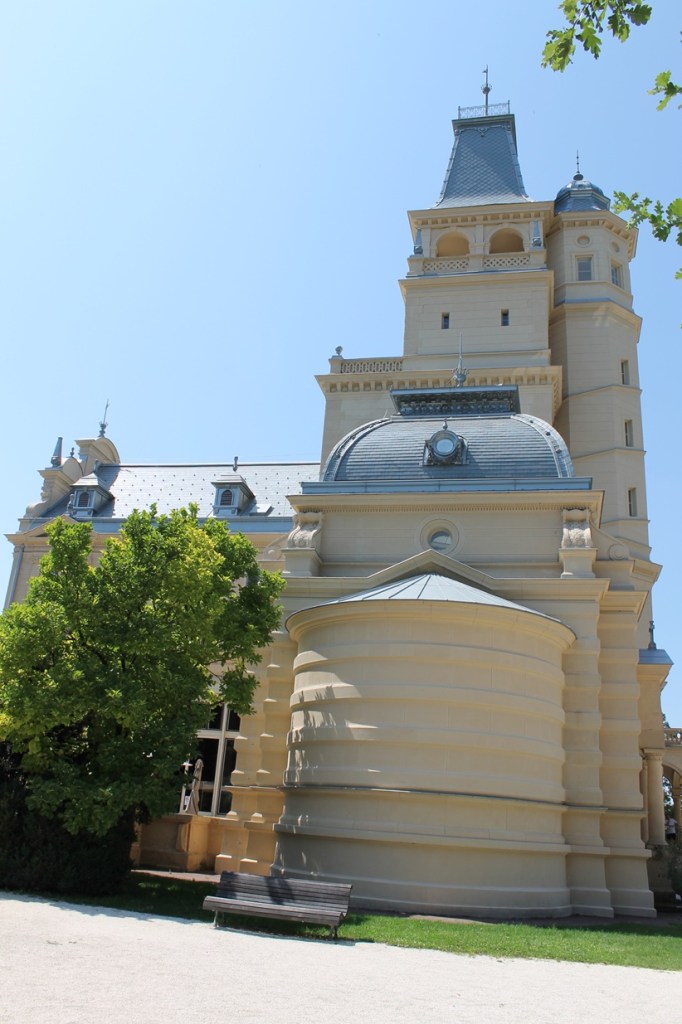
The family home, now restored and turned into a museum stands as a jewel in the Eastern part of Hungary, near Újkígyós.
 Még pár oldal - a betűgyár